Short Answer
Home exposure usually comes from repeated daily contact with indoor air, water, soft surfaces, and frequently used household products—not from one dramatic source. For us as parents, knowing where exposure actually happens helps us focus on the patterns that matter most and ignore the noise.
Why This Matters for Us as Parents
When people talk about creating a “healthier home,” the conversation can get broad fast.
Suddenly everything feels suspicious:
The couch.
The rug.
The paint.
The laundry detergent.
The candle you lit once in December.
But the truth is calmer: exposure is mostly about repetition.
Your family’s most meaningful home exposure comes from what happens every day:
- The air you breathe for hours
- The water you drink and bathe in
- The surfaces your children crawl on and nap on
- The products you spray, wash with, and diffuse into the air
If we focus on daily patterns, low-toxic living becomes manageable. If we treat every item like an emergency, it becomes exhausting.
This article is meant to help you see your home clearly, which builds directly from what does “low-toxic” mean in your home.
What to Know (The Basics)
Home exposure patterns usually fall into four “zones”:
- Air (continuous exposure)
- Water (daily ingestion and contact)
- Soft surfaces and dust (duration + proximity)
- Daily-use product habits (what becomes airborne)
The simplest question is:
“Where does my family spend the most time, and what is happening in that space daily?”
That question is more useful than trying to evaluate every object you own.
Clear Subsections
1) Bedrooms: Sleep Is High Duration
Bedrooms are high-duration zones. Even if your home is large, most families spend a significant portion of every day sleeping.
What matters here:
- Mattress and bedding contact
- Ventilation (stale air overnight can feel heavy)
- Fragrance (plug-ins or diffusers running all night)
- Dust accumulation (soft goods hold dust)
You don’t need a perfect bedroom. You need a breathable one. The mattress is the single highest-contact surface in most homes — if there’s one place a certified material choice pays off, it’s here. Our guide to non-toxic mattresses for families and guide to non-toxic crib mattresses cover what certifications actually verify and what to look for when it’s time to replace.
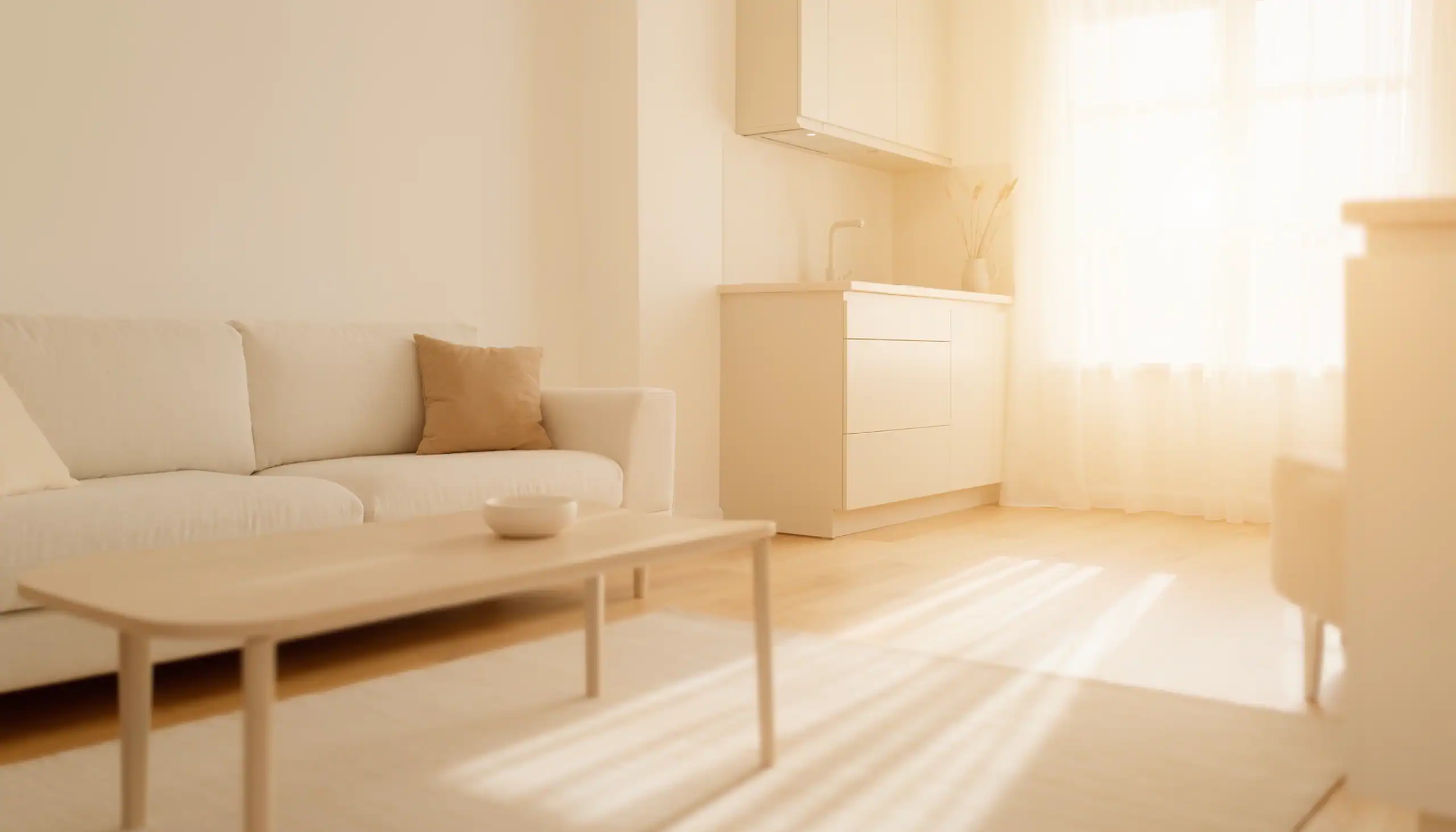
2) Living Rooms: Soft Surfaces + Time Spent
Living rooms often contain:
- Upholstery
- Rugs
- Curtains
- Pillows and throws
These items are not “bad.” They’re just long-contact and dust-holding by nature.
Children also spend more time closer to floors and fabrics than adults do. That doesn’t mean you need to rip out your rug; it means vacuuming, ventilation, and thoughtful replacement over time matters more than panic.
If you want a calm prioritization framework, what matters most (and what matters less) in your home is the article that helps you choose where to put your energy first.
3) Kitchens: Air + Water + Product Habits
Kitchens are exposure zones because:
- Cooking releases particles into air
- Water is used constantly
- Cleaning sprays are common
- Ventilation varies widely by home
Using a range hood or opening a window during cooking can matter more than swapping a dozen products at once. When it comes to the cleaning products used daily on surfaces, dishes, and cookware, fragrance-free formulas make a meaningful difference in what becomes airborne in an enclosed kitchen. Our guides to non-toxic cleaning products, non-toxic dish soap, and non-toxic dishwasher detergent cover the daily-use options most families swap first. Small habits add up.
4) Bathrooms: Water, Humidity, and Products
Bathrooms involve:
- Daily water contact
- Humidity (which can affect air comfort)
- Products stored in enclosed spaces (fragrance can linger)
- Cleaning products used in small rooms
Again, this isn’t about fear. It’s about noticing what’s repeated in enclosed spaces. Cleaning products used in a small bathroom with the door closed release more into the air than the same product used in an open kitchen. Fragrance-free, biodegradable cleaners make the most difference in exactly this kind of space — our guide to non-toxic cleaning products covers the options that work well without adding to indoor air load.
5) Laundry Areas: Fragrance Is Often the Hidden Driver
Laundry is a surprisingly common source of persistent home fragrance.
Common patterns include:
- Strongly scented detergents
- Scent boosters
- Dryer sheets
- Fabric sprays
Because laundry scent transfers into clothing, towels, bedding, and upholstery, it can become a whole-home exposure pattern — not just a laundry room issue. The detergent is the easiest place to start. Our guide to non-toxic laundry detergent covers the fragrance-free options that clean effectively without the synthetic scent compounds that linger in every fabric they touch. For fragrance-sensitive families, this is often the single highest-impact swap in the whole house.
6) New Purchases: Temporary Spikes
New furniture, rugs, paint, and flooring can temporarily increase indoor VOCs.
The important thing: this usually improves with time and airflow.
Strong “new item” smell is often a sign to ventilate, not panic. Opening windows, running fans, and allowing items to air out changes concentration.
This connects to understanding VOCs (without the fear), which explains why off-gassing often decreases over time and how ventilation helps.
Common Myths or Misconceptions
- “If there isn’t visible damage, there’s no exposure.”
- “If something smells ‘fresh,’ it must be healthier.”
- “If I can’t replace big items, I can’t improve anything.”
- “Only new homes have VOCs.”
- “Only old homes have problems.”
Most of the time, home exposure is shaped by habits and airflow—not by whether your home is old or new.
How We as Parents Can Approach This Safely
Here’s a practical approach that doesn’t require overhauls:
- Identify your top two high-time zones (usually bedrooms and living rooms).
- Improve ventilation where you can.
- Reduce constant fragrance patterns if they’re present.
- Keep dust maintenance steady (vacuuming, washing soft goods).
- Treat new purchases as temporary (air out, ventilate, give time).
Then, if you want the bigger framework, revisit what does “low-toxic” mean in your home to stay grounded in the definition and avoid rabbit holes.
Final Takeaway
Home exposure happens most through daily patterns—air, water, soft surfaces, and product habits—especially in bedrooms and main living areas where families spend the most time. For us as parents, focusing on repeated routines keeps low-toxic living practical, calm, and sustainable.
