Last reviewed: May 2026
Quick Answer
The best non-toxic baby body wash is the Primally Pure Baby Bar — five certified organic ingredients, no preservatives, and no essential oils. It’s the simplest formula in this guide. If you prefer a liquid, Earth Mama Simply Non-Scents Baby Wash has a short organic-led ingredient list, zero traditional preservatives, and consistent availability on Amazon. For eczema-prone skin specifically, Babo Botanicals Sensitive Baby Shampoo & Wash is accepted by the National Eczema Association and built around whole oat flour. All nine picks below skip synthetic fragrance, sulfates, parabens, and synthetic preservatives. They’re ordered from fewest to most ingredients — with preservative load as the tiebreaker — so you can find your comfort level and start there.
Why the formula matters for baby skin
Baby skin is thinner and more permeable than adult skin, which means it absorbs a higher proportion of what gets applied to it. That’s not a reason to panic — it’s a reason to be intentional. Bath time happens every day or every few days for years, so what’s in the bottle adds up in a way that a one-off product doesn’t.
The best non-toxic baby body wash cleans without disrupting the skin barrier, skips the additives that commonly cause irritation, and is transparent about what’s in it. Most conventional baby washes aren’t dangerous in a single use, but many contain synthetic fragrance, sulfate-based surfactants, or preservatives that have no business being in a product used daily on newborn skin. The cleaner alternatives are widely available now — often at the same price point — and once you know what to look for, choosing one takes thirty seconds.
Quick Answer
The best non-toxic baby body wash is the Primally Pure Baby Bar — five certified organic ingredients, no preservatives, and no essential oils. It’s the simplest formula in this guide. If you prefer a liquid, Earth Mama Simply Non-Scents Baby Wash has a short organic-led ingredient list, zero traditional preservatives, and consistent availability on Amazon. For eczema-prone skin specifically, Babo Botanicals Sensitive Baby Shampoo & Wash is accepted by the National Eczema Association and built around whole oat flour. All nine picks below skip synthetic fragrance, sulfates, parabens, and synthetic preservatives. They’re ordered from fewest to most ingredients — with preservative load as the tiebreaker — so you can find your comfort level and start there.
Our Top Picks at a Glance
The products we share are chosen through a low-toxic, mindful-living lens — prioritizing what goes in and on our bodies, into our homes, and back into the earth. Some links in this guide are affiliate links, which means we may earn a small commission at no extra cost to you.
Swipe to view full comparison →
| Product | Format | Ingredients | Preservative tier | Certification | Best for |
|---|---|---|---|---|---|
| Primally Pure Baby Bar | Bar | 5 | Tier 1 — none | — | Simplest formula |
| Badger Baby Shampoo & Body Wash | Liquid | 6 | Tier 2 — rosemary only | B Corp, Organic | In-store availability |
| Aleavia Enzymatic Body Cleanse | Liquid | 7 | Tier 1 — none | — | Prebiotic, no surfactants |
| Coterie The First Wash | Liquid | 8 | Tier 3 — SB + PS | EWG Verified | Shortest liquid + preservatives |
| Earth Mama Simply Non-Scents | Liquid | 10 | Tier 1 — none | EWG Verified | Best all-around liquid |
| Pipette Baby Shampoo + Wash | Liquid | 10 | Tier 1 — none | EWG Verified | Best ingredient story |
| Carina Organics Unscented | Liquid | 12 | Tier 2 — ACV + pine | MADE SAFE | Zero synthetic preservatives |
| Babo Botanicals Sensitive | Liquid | 12 | Tier 3 — SB + PS | EWG Verified, NEA | Eczema-prone skin |
| Attitude Baby Leaves (unscented) | Liquid | 14 | Tier 3 — SB + PS | EWG Verified | Budget, widely available |
SB = Sodium Benzoate. PS = Potassium Sorbate. NEA = National Eczema Association Seal of Acceptance.
What to look for in a non-toxic baby wash
Marketing language on the front of a bottle — “gentle,” “natural,” “pure” — is unregulated and tells you nothing. The ingredient list on the back is where the real information is. Here’s how to read it.
Surfactants: the cleansing agents
Surfactants lift dirt and oil so they rinse away with water. The type used is the most important variable in any baby wash formula.
| Look for | Avoid |
|---|---|
| Coco-Glucoside (coconut + glucose, very gentle) | Sodium Lauryl Sulfate — SLS (harsh, strips skin barrier) |
| Potassium Cocoate (saponified coconut oil) | Sodium Laureth Sulfate — SLES (can contain 1,4-dioxane) |
| Sodium Cocoyl Glutamate (amino acid-based) | Ammonium Lauryl Sulfate |
| Sodium Lauroyl Sarcosinate (amino acid-based) | |
| Sodium Cocoyl Isethionate (coconut-derived, mild) | |
| Cocamidopropyl Betaine (coconut-derived, gentle) |
One to know: Sodium Coco-Sulfate. Often marketed as a natural alternative to SLS, it’s milder because it comes from whole coconut oil and contains a range of carbon chain lengths. But it is still a sulfate-based surfactant — worth knowing when you see it listed. We flag it where it appears in this guide.
Preservatives: what kind matters
Any water-based liquid formula needs a preservation system to prevent bacterial and mold growth. A liquid product with no preservation approach isn’t a selling point — it’s a stability concern. The question is what kind is used.
| Type | Examples | Notes |
|---|---|---|
| None (Tier 1) | Pipette, Earth Mama, Aleavia, Primally Pure | Achieved through pH, sucrose, minerals, or bar format |
| Natural antioxidant (Tier 2) | Badger, Carina Organics | Rosemary extract or ACV + pine — no traditional preservatives |
| Natural antimicrobial (Tier 3) | Babo Botanicals, Coterie, Attitude | Sodium benzoate + potassium sorbate — natural-derived, considered low-risk |
| Synthetic (avoid) | Phenoxyethanol, any -paraben | Not present in any pick in this guide |
| Formaldehyde releasers (avoid) | DMDM Hydantoin, Quaternium-15 | Not present in any pick in this guide |
On Tier 3 preservatives: Sodium benzoate and potassium sorbate are natural-derived and appear in some EWG Verified products because they’re considered low-risk at personal care concentrations. They’re disclosed throughout this guide for transparency — not flagged as a concern.

Beneficial ingredients worth knowing
Beyond the cleansing and preservation system, these are the ingredients that add genuine benefit and that you’ll see appearing across the picks in this guide.
Calendula extract — anti-inflammatory and skin-soothing, well-documented in baby formulas and gentle on reactive skin.
Bisabolol — isolated from chamomile, a proven skin-calming compound. Notably used in Pipette’s formula.
Squalane — a stable oil from sugarcane, structurally similar to the skin’s own natural lipids. Hero ingredient in Pipette specifically.
Organic Sea Kelp — provides prebiotic nutrients that feed beneficial bacteria on the skin’s surface. The active cleansing mechanism in Aleavia.
Avena Sativa (Oat) Kernel Flour — whole oat flour, not oat extract or oat oil. The distinction matters: the flour contains beta-glucan and avenanthramides at concentrations with documented benefit for eczema-prone skin. Used in Babo Botanicals.
Magnesium Chloride — delivers trace minerals and supports the skin barrier. Part of Carina Organics’ formula.
Glycerin (vegetable-derived) — a humectant that draws moisture into the skin. Low irritation potential, widely used across all skin types.
Kaolin Clay — a mineral clay that cleanses gently without any liquid surfactants. Used in bar soap formulas.
Fragrance: the single most important thing to check
Synthetic fragrance appears as “fragrance” or “parfum” on a label. This one word can represent dozens of undisclosed chemical compounds — a trade secret loophole that allows brands to hide potentially irritating ingredients. It’s one of the leading causes of contact dermatitis in infants. Avoid it entirely.
Natural fragrance still doesn’t require ingredient disclosure. For babies, treat it the same as synthetic.
Essential oils are technically natural but potent — some are documented skin sensitizers, and most aren’t recommended for newborns under three months. Fragrance-free and essential-oil-free is the standard applied throughout this guide.
A note on certifications
When you’re scanning baby wash labels, you’ll see a handful of certification seals that are worth understanding — because they don’t all measure the same thing, and none of them replace reading the ingredient list yourself.
EWG Verified is one you’ll see often in this category. It’s run by the Environmental Working Group, a non-profit that also maintains the Skin Deep ingredient database — a genuinely useful tool for looking up individual ingredients and what research exists on them. The Verified seal itself, though, is a paid certification. Brands apply and pay to be reviewed. That means a product without the seal isn’t necessarily less clean — it may simply not have gone through the process. We use the Skin Deep database as a research starting point at Son & Sea, but the seal alone isn’t what determines whether a product makes it into our guides. The ingredient list does.
MADE SAFE goes further than EWG in one important way: it evaluates not just whether an ingredient is harmful to humans, but whether it’s harmful to ecosystems, wildlife, and the environment over time. If supply chain transparency and environmental impact matter to you alongside ingredient safety, MADE SAFE is the more comprehensive signal of the two.
The National Eczema Association Seal of Acceptance is the most relevant certification specifically for eczema-prone and reactive skin. The NEA reviews formulas against criteria developed around what actually triggers flares and irritation in compromised skin barriers — which is a different standard than general ingredient safety. Dermatologists and pediatric dermatologists who treat eczema recognize it, which is why it carries weight in this specific context in a way EWG Verified doesn’t.
None of these seals are a substitute for reading the label. But when you see them, this is what they’re actually telling you.
Ingredients to avoid on any label
Rather than a brand-specific list, here’s what to look for — the same problematic ingredients appear across many products and once you know the names, spotting them takes seconds.
Surfactants: Sodium Lauryl Sulfate (SLS), Sodium Laureth Sulfate (SLES), Ammonium Lauryl Sulfate. Sodium Coco-Sulfate is a coconut-derived sulfate — milder than SLS but still a sulfate, worth noting when it’s the primary surfactant.
Fragrance: “Fragrance,” “Parfum,” or any essential oils listed in products for newborns and young infants.
Preservatives: Any -paraben (methylparaben, propylparaben, butylparaben), Phenoxyethanol, DMDM Hydantoin, Imidazolidinyl Urea, Quaternium-15, Bronopol.
Dyes: FD&C or D&C colors — no function in a wash-off product and an unnecessary sensitization risk.
Some familiar baby wash brands contain several items from this list. Johnson’s Baby Wash contains synthetic fragrance and a formaldehyde-releasing preservative (DMDM Hydantoin). Aveeno Baby Wash contains fragrance and phenoxyethanol despite its “gentle” positioning. Babyganics uses “natural fragrance” without ingredient disclosure. None of these are acutely dangerous in a single use, but for daily application on newborn skin over years, the options in this guide are meaningfully better — often at the same price point.
A note on Mustela: They make two distinct product lines. The original line contains fragrance. The Stelatopia eczema line and Stelatina sensitive line are considerably cleaner. If someone recommends Mustela, it matters significantly which product they mean.
The 9 best non-toxic baby body washes

All ingredient lists are verified as of this review date. Formulas do change — confirm against the current product page before purchasing.
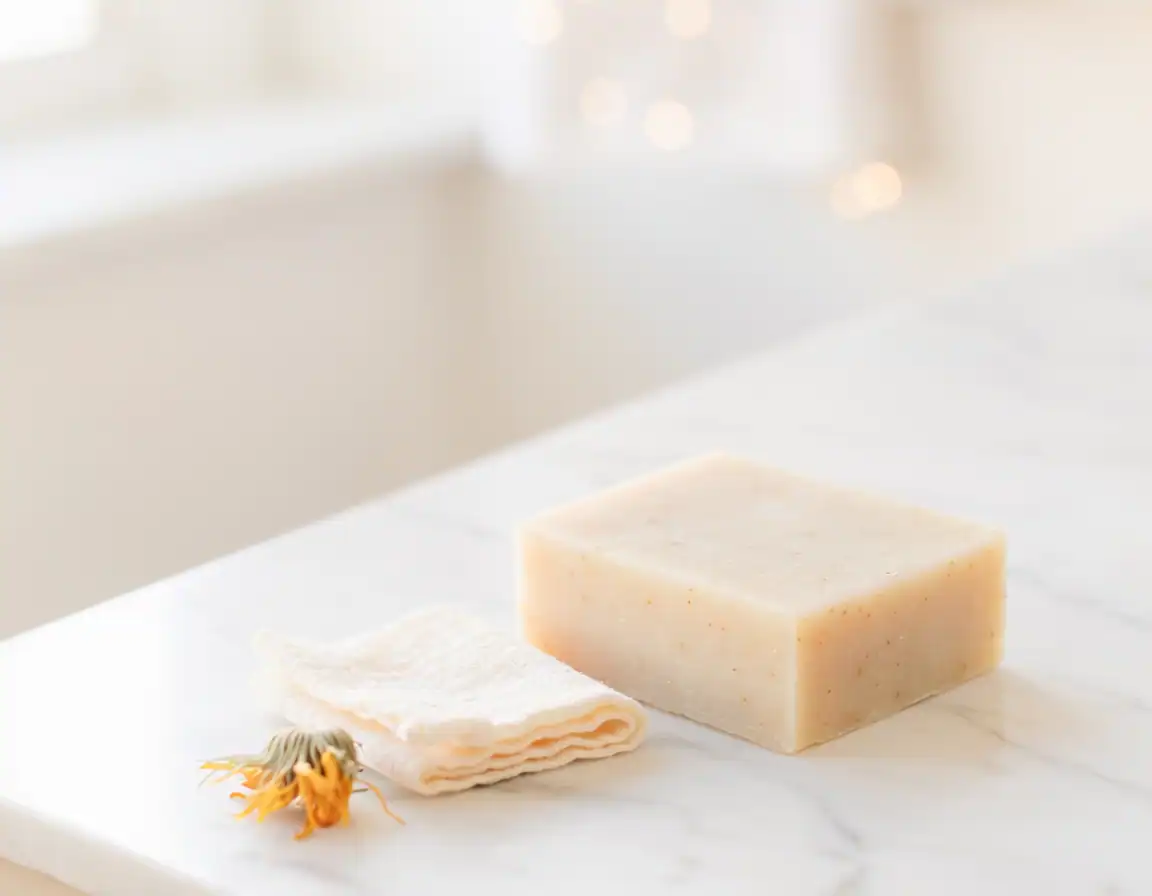
1. Primally Pure Baby Bar — 5 ingredients, zero preservatives
Best for: The most minimal formula possible. No water, no surfactants, no preservatives.
Ingredients: Saponified Organic Coconut Oil*, Saponified Organic Olive Oil*, Saponified Organic Castor Oil*, Saponified Organic Shea Butter*, Kaolin Clay (*Certified Organic)
Five ingredients. Bar soap requires no preservatives because there’s no water — which removes the preservative question entirely. Saponification is the traditional soap-making process: oils react with an alkali to create soap and glycerin. Kaolin clay provides gentle mineral cleansing. No essential oils, no fragrance, no synthetic additives.
Primally Pure formulates their baby products specifically without essential oils — this isn’t true of their adult line, so make sure you’re purchasing the baby bar. Lathering in your hands first and applying to the baby is the easiest approach during a bath.
2. Badger Baby Shampoo & Body Wash — 6 ingredients, natural antioxidant only
Best for: Certified organic liquid wash from a transparent, family-owned B Corp. Easiest to find in physical stores.
Ingredients: Water, Saponified Organic Sunflower Oil, Saponified Organic Coconut Oil, Organic Glycerin, Rosemary Extract, Organic Chamomile Oil
Six ingredients, all certified organic or naturally derived. The surfactant system is saponified sunflower and coconut oils — the same gentle chemistry as bar soap in a pourable format. Rosemary extract is a natural antioxidant that contributes to formula stability without sodium benzoate or potassium sorbate.
One note: “Organic Chamomile Oil” — for most babies this is a gentle, well-tolerated botanical. If your baby is under three months or has known sensitivities, contact Badger directly to confirm the form and concentration. For older infants, chamomile is widely used and gentle across all applications.
Badger has been formulating clean products since 1995, is a Certified B Corp, US-made, and family-owned. One of the most available picks in physical stores — natural grocery, Whole Foods, many pharmacies.
3. Aleavia Enzymatic Prebiotic Body Cleanse — 7 ingredients, zero preservatives
Best for: Families who want a liquid wash with no traditional preservatives and a fundamentally different approach to cleansing.
Ingredients: Filtered Water, Coconut Oil, Aloe Vera, Dead Sea Salt, Organic Sea Kelp, Citric Acid, Plant Glycerin
Seven ingredients. No surfactants. No traditional preservatives. Aleavia works differently from every other pick in this guide.
Rather than using surfactants to strip and rinse away dirt, this formula is enzymatic and prebiotic. Organic sea kelp provides nutrients that feed beneficial bacteria on the skin’s surface, supporting the microbiome rather than disrupting it. Coconut oil provides cleansing and moisturizing action. Dead Sea salt exfoliates gently and delivers trace minerals. Citric acid adjusts pH; the mineral-rich composition contributes to stability without sodium benzoate or potassium sorbate.
Two things worth setting expectations on: this wash produces very little lather because there are no surfactants — it’s working, just differently than you’re used to. Aleavia is primarily an adult body wash marketed as safe for the whole family including babies, rather than a product formulated exclusively for infants.
4. Coterie The First Wash — 8 ingredients, natural preservatives
Best for: The fewest ingredients of any liquid wash using a traditional preservation system.
Ingredients: Water, Coco-Glucoside, Glycerin, Sodium Citrate, Panthenol (Vitamin B5), Sodium Benzoate, Citric Acid, Potassium Sorbate
Eight ingredients. Coco-Glucoside alone handles all cleansing — no secondary surfactant needed. Panthenol (B5) supports skin moisture and gentle repair. The preservatives — sodium benzoate and potassium sorbate — are disclosed here because this guide names every preservative in every formula, not because they’re a concern.
5. Earth Mama Simply Non-Scents Baby Wash — 10 ingredients, zero preservatives
Best for: The most consistently recommended liquid formula across the non-toxic parenting community. Wide availability, consistent stock.
Ingredients: Water, Aloe Barbadensis Leaf Juice (Organic), Cocamidopropyl Betaine, Coco-Glucoside, Glycerin, Calendula Officinalis Flower Extract (Organic), Chamomilla Recutita Flower Extract (Organic), Hydrolyzed Oats, Sodium Gluconate, Citric Acid
The formula opens with organic aloe juice rather than plain water. Both surfactants — Cocamidopropyl Betaine and Coco-Glucoside — are coconut-derived and mild. Organic calendula and chamomile bring anti-inflammatory benefit. Hydrolyzed oats add a mild eczema-calming effect.
Sodium gluconate is a chelating agent, not a preservative — it binds trace metal ions that can degrade a formula. Citric acid manages pH. No traditional preservatives, no fragrance, no sulfates, no parabens. Earth Mama was founded by a nurse and herbalist, and that shows in how they formulate.
6. Pipette Baby Shampoo + Wash — 10 ingredients, zero preservatives
Best for: The most considered individual formula in this guide. Strong ingredient story for parents who want to understand what each ingredient does.
Ingredients: Water, Coco-Glucoside, Sodium Cocoyl Glutamate, Glycerin, Sucrose, Squalane (sugarcane-derived), Bisabolol, Sodium PCA, Sodium Citrate, Citric Acid
Ten ingredients, zero traditional preservatives. Formula stability is achieved through pH management and sucrose, which creates an inhospitable environment for bacterial growth without sodium benzoate or potassium sorbate.
The hero ingredient is sugarcane-derived squalane. Squalane is structurally similar to vernix — the waxy protective coating babies are born with — making it an unusually considered choice for newborn skin. Sodium Cocoyl Glutamate is amino acid-based, among the mildest surfactants available. Bisabolol is a documented skin-calming compound isolated from chamomile. Sodium PCA is a natural humectant found in the skin itself.
7. Carina Organics Unscented Baby Shampoo & Body Wash — 12 ingredients, no synthetic preservatives
Best for: A botanically complex, MADE SAFE certified formula with zero synthetic preservatives.
Ingredients: Filtered Aqua, Potassium Cocoate (Saponified Organic Coconut Oil)*, Glycerin (vegetable), Pinus banksiana (pine) extract, Magnesium Chloride (Magnesium Oil), Olea europaea (olive) fruit oil*, Matricaria chamomilla (chamomile) flower extract*, Urtica dioca (nettle) leaf extract*, Taraxacum officinale (dandelion) leaf extract*, Trifolium pratense (clover) flower extract*, Acetic Acid (Apple Cider Vinegar)*, Cucurbita pepo (pumpkin) seed oil* (*Certified Organic)
Twelve ingredients, no synthetic preservatives. Formula stability comes from apple cider vinegar, which lowers pH to inhibit bacterial growth, and pine extract, which provides natural antioxidant and mild antimicrobial support — no sodium benzoate or potassium sorbate. The surfactant is potassium cocoate — saponified coconut oil — gentle soap chemistry in a liquid format.
The botanical complex — chamomile, nettle, dandelion, clover — brings anti-inflammatory and soothing properties. Magnesium chloride delivers trace minerals. Pumpkin seed oil is rich in zinc and fatty acids. Like Badger and Aleavia, this formula produces lower lather than conventional washes given the saponified oil base. Carina Organics is a Canadian brand with MADE SAFE certification, available on Amazon.
Important: Select the unscented version specifically. The scented version adds sweet pea flower extract — fine for most, but not fragrance-free for a newborn.
Shop Carina Organics on Amazon →
8. Babo Botanicals Sensitive Baby Shampoo & Wash — 12 ingredients, natural preservatives
Best for: Eczema-prone and reactive skin. The most evidence-backed pick in this guide for sensitive skin.
Ingredients: Water, Sodium Lauroyl Sarcosinate, Cocamidopropyl Betaine, Glycerin, Avena Sativa (Oat) Kernel Flour, Calendula Officinalis Flower Extract, Chamomilla Recutita Flower Extract (Organic), Glyceryl Oleate, Sodium Chloride, Citric Acid, Potassium Sorbate, Sodium Benzoate
Twelve ingredients, with sodium benzoate and potassium sorbate as preservatives. Babo ranks eighth by ordering criteria — not because it’s a lesser formula, but because it has the highest ingredient count of the verified-clean picks and uses Tier 3 preservatives. For eczema-prone skin specifically, it’s the strongest choice in this guide.
The standout is whole oat flour (Avena Sativa Kernel Flour). The flour contains beta-glucan and avenanthramides at concentrations with the strongest documented anti-inflammatory and skin barrier benefit for eczema. This is meaningfully different from oat extract or oat oil. Combined with the National Eczema Association Seal of Acceptance, Babo is the most clearly evidence-backed choice for reactive skin.
Sodium Lauroyl Sarcosinate is the primary surfactant. Despite sounding similar to sodium lauryl sulfate, it’s amino acid-derived and significantly milder — a much better tolerance profile for compromised skin barriers.
Shop Babo Botanicals on Amazon →
9. Attitude Baby Leaves 2-in-1 Shampoo & Body Wash (unscented) — 14 ingredients, natural preservatives + surfactant note
Best for: EWG Verified, widely available, Amazon Prime eligible. Read the ingredient list before buying.
Ingredients: Aqua / Water, Sodium Coco-Sulfate, Coco-Glucoside, Glycerin, Sodium Cocoyl Isethionate, Lauryl Hydroxysultaine, Citric Acid, Sodium Chloride, Glyceryl Oleate, Sodium Benzoate, Potassium Sorbate, Guar Hydroxypropyltrimonium Chloride, Inulin, Vaccinium Myrtillus (Blueberry) Leaf Extract
Fourteen ingredients, including sodium benzoate and potassium sorbate as preservatives, and Sodium Coco-Sulfate as the primary surfactant. Sodium Coco-Sulfate is a coconut-derived sulfate — milder than SLS because it contains a range of carbon chain lengths from whole coconut oil, but still a sulfate-based surfactant. Other picks in this guide use gentler alternatives. This is flagged for transparency.
The rest of the formula is genuinely considered: Coco-Glucoside and Sodium Cocoyl Isethionate as secondary surfactants are both mild. Inulin is a prebiotic fiber. Blueberry leaf extract is an antioxidant. It’s EWG Verified and used without issue by many families. If you’ve been using it with good results, this isn’t a reason to stop. If you’re starting from scratch and evaluating options, one of the earlier picks is where this guide would point you first.
Note: Attitude makes many products in many scent variations. The product to buy is Baby Leaves 2-in-1, unscented — Scented versions contain essential oils.
Many of these brands are 2-in-1 options, for both body wash and shampoo. If you’re looking for a shampoo-only recommendation, check out our full guide on the best Non-Toxic Shampoo for Babies with Sensitive Scalps.

For eczema-prone skin
If your baby has eczema or reactive skin, a few things matter more than general criteria.
Surfactant type is the most important variable. Sodium Lauroyl Sarcosinate (Babo), Potassium Cocoate (Carina Organics, Badger), and Coco-Glucoside (multiple picks) are the most reliably gentle options for compromised skin barriers. Avoid any sulfate-based surfactant.
Whole oat flour specifically. Babo Botanicals is the only pick using Avena Sativa Kernel Flour — whole oat flour with documented eczema benefit. Oat extract and oat oil are not equivalent.
Fragrance-free is non-negotiable. All nine picks here are fragrance-free. Confirm the specific SKU before purchasing — scented versions of some brands exist.
Fewer ingredients means fewer variables. If a reaction occurs, a shorter ingredient list makes it easier to identify the cause. Starting with Primally Pure, Badger, or Aleavia before moving to longer formulas is a practical approach.
Top picks for eczema: Babo Botanicals (National Eczema Association accepted, oat flour formula), Earth Mama (organic calendula and chamomile, oat-infused), Primally Pure Baby Bar (five ingredients, nothing to react to).
Frequently asked questions
What is the best non-toxic baby body wash? The best non-toxic baby body wash is Primally Pure Baby Bar for the simplest possible formula — five certified organic ingredients and no preservatives. For a liquid, Earth Mama Simply Non-Scents is the most community-validated option with zero traditional preservatives. For eczema-prone skin, Babo Botanicals Sensitive Baby Shampoo & Wash is accepted by the National Eczema Association.
Is bar soap safe for babies? Yes — for very young infants bar soap is often the ideal choice because it requires no preservatives at all. The Primally Pure Baby Bar is specifically formulated without essential oils. Lathering in your hands first and then applying to the baby makes it manageable in the bath.
What is the difference between fragrance-free and unscented baby wash? Fragrance-free means no fragrance ingredients were added to the formula. Unscented means the product has no noticeable scent, but masking agents may have been added to neutralize the natural smell of the ingredients. For babies, fragrance-free is the correct standard. All nine picks in this guide are fragrance-free.
Is EWG Verified the most reliable standard for baby wash? EWG Verified is a useful signal but a paid certification — brands pay to be reviewed. A product without the seal may have a fully clean ingredient profile. At Son & Sea, we read ingredient lists as our primary standard. The EWG Skin Deep database is a useful research tool, but we treat it as a starting point rather than a verdict.
What is Sodium Coco-Sulfate and is it safe for babies? Sodium Coco-Sulfate is a coconut-derived sulfate surfactant. It’s milder than Sodium Lauryl Sulfate because it contains a range of carbon chain lengths rather than only C12, but it is still a sulfate-based surfactant. It’s used in Attitude’s formula, which holds EWG Verified status. For babies with sensitive or eczema-prone skin, the earlier picks in this guide that use Coco-Glucoside or amino acid-based surfactants are a better starting point.
When can babies start using body wash? Most guidance recommends waiting until the umbilical cord stump falls off — usually one to four weeks — before regular baths with wash. Plain warm water is sufficient for newborns in the first weeks. After that, a simple fragrance-free wash is appropriate.
How often should I bathe my baby with body wash? Two to three times per week is generally sufficient. Daily bathing can dry out newborn skin. On non-bath days, a warm wet cloth to clean the diaper area and skin folds is enough.
Is Pipette or Earth Mama better for newborns? Both have ten ingredients and zero traditional preservatives. Pipette’s squalane formula is uniquely suited to newborn skin but has recurring stock issues. Earth Mama has wider availability, consistent stock, and stronger community backing over time. If Pipette is in stock and you want the most considered individual formula, start there. If you want reliability of supply, Earth Mama.
Bottom Line
The ordering in this guide is intentional: start at the top if you want the simplest formula and work down as ingredient counts and preservative loads increase. Primally Pure gives you five organic ingredients and nothing else. Badger gives you six with a liquid option and in-store availability. Earth Mama is the most reliable all-around liquid at ten ingredients with zero traditional preservatives. For eczema-prone skin, Babo Botanicals is the most evidence-backed choice in the guide despite ranking eighth in the ordering — the National Eczema Association seal and the oat flour formula put it in a different category for reactive skin.
All nine picks skip synthetic fragrance, sulfates, parabens, and synthetic preservatives. Read the surfactant and preservative sections of any new label you encounter, and you’ll be equipped to evaluate it yourself without needing a guide or a certification to tell you what to think.
Related Guides
Building a complete non-toxic bath and body routine for your baby goes beyond body wash — here’s where to look next for the products that surround it.
- Best Non-Toxic Baby Shampoo for Sensitive Scalps
- Best Non-Toxic Baby Wipes
- Best Non-Toxic Diaper Cream for Sensitive Skin
- Best Non-Toxic Sunscreen for Families and Babies
