Short Answer
Many childhood exposures happen quietly through everyday routines — shared air, household dust, surfaces, fabrics, and items used daily. This exposure is usually unintentional, gradual, and manageable once parents understand where it commonly comes from.
Why This Matters for Parents
Most parents aren’t overlooking anything or doing something wrong. Exposure doesn’t usually come from obvious mistakes — it comes from ordinary life. The places our kids sleep, play, eat, and spend time every single day matter far more than the occasional or unusual situation.
For many parents, learning about exposure can feel uncomfortable at first. It can trigger thoughts like, “Should I have known this already?” or “Am I missing something important?” That reaction is incredibly common. The truth is, most of this information isn’t shared in a clear or calm way, which makes it feel heavier than it needs to be.
When exposure is explained without fear, many parents actually feel relief. The focus shifts away from guilt and toward awareness — and awareness is something you can work with.
What to Know (The Basics)
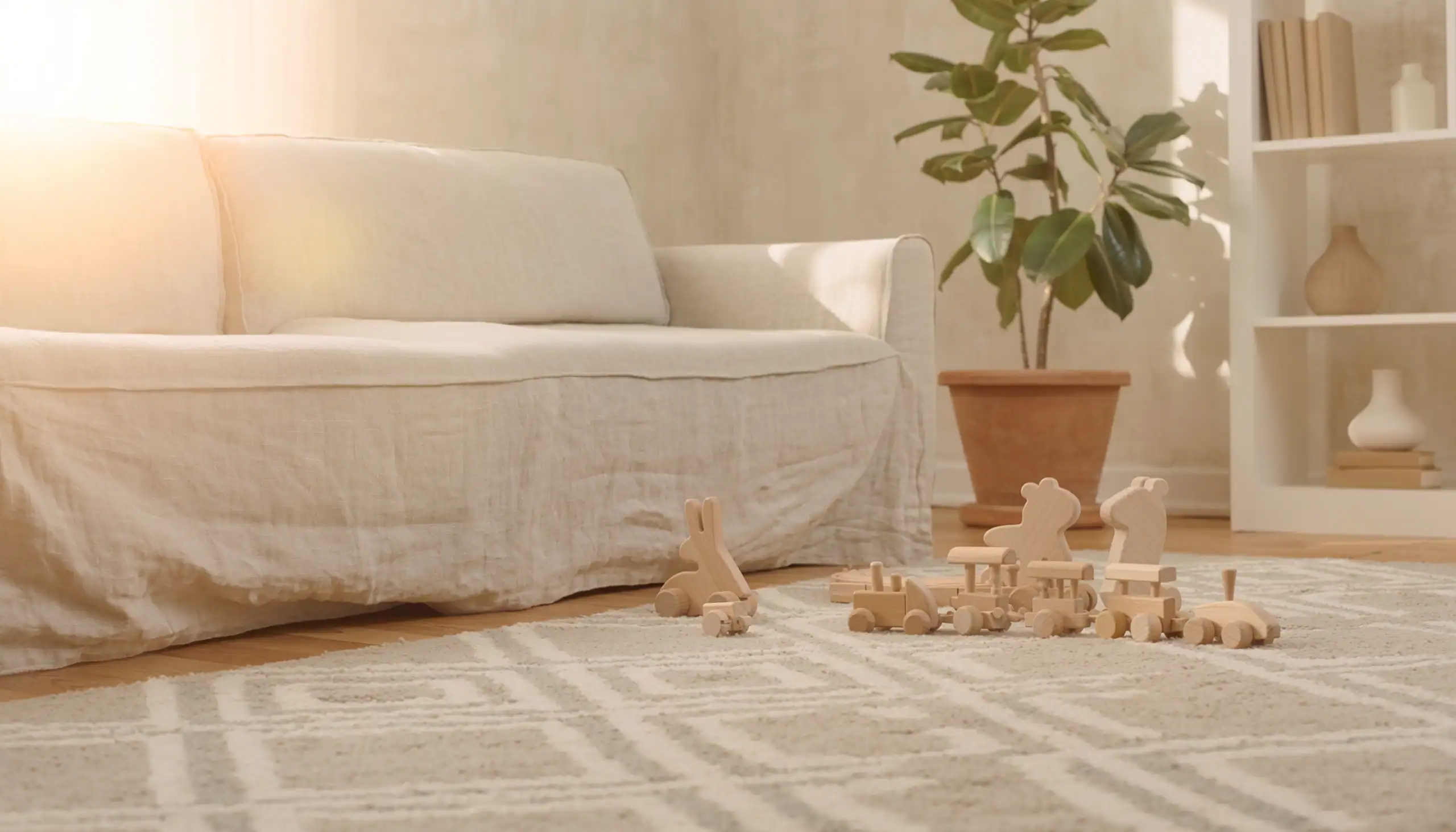
Children experience their home environment differently than adults. They are physically closer to the ground, they touch more surfaces, and they explore the world using their hands, mouths, skin, and breath.
Exposure at home often happens through:
- Indoor air and household dust
- Floors, rugs, and other soft furnishings
- Surfaces touched repeatedly throughout the day
- Items and materials used regularly in shared spaces
None of these things are automatically harmful. They simply explain why frequency and repetition matter more than one-time contact. When something is encountered many times a day, day after day, it becomes more relevant than something encountered once.
This is why the home environment is often a helpful place for parents to focus — not because it’s unsafe, but because it’s familiar and within reach.
How Exposure Shows Up in Daily Life
Exposure at home is rarely dramatic. It doesn’t come with flashing warning signs or obvious symptoms. Instead, it shows up quietly through routines that feel completely normal.
For example:
- Babies and toddlers spend a lot of time on floors while crawling, rolling, or playing
- Soft surfaces like rugs, cushions, and bedding tend to hold onto dust
- Little hands touch the same toys, doorknobs, and furniture repeatedly
- Items that seem insignificant on their own may be used dozens of times each day
Over time, these small interactions add up. This doesn’t mean parents need to be constantly alert or anxious — it simply helps explain why everyday environments matter more than rare or unusual situations.
Seeing exposure this way often helps parents stop worrying about isolated moments and start thinking more practically about daily life.
Why This Is Easy to Miss
One reason exposure at home goes unnoticed is that it’s tied to things we associate with comfort and safety. Our homes feel familiar. They’re where routines happen and where children are supposed to feel secure.
Because of that, parents often assume that anything inside the home must automatically be safe. In reality, many materials are designed for convenience, durability, or cost — not necessarily long-term, repeated exposure.
This doesn’t mean homes are dangerous. It just means that “normal” doesn’t always equal “neutral,” especially when it comes to repeated contact over time.
Common Myths or Misconceptions
- “If it’s in my home, it must be completely safe.”
Many materials are common, not carefully evaluated for long-term exposure. - “Exposure only comes from obvious products.”
Air, dust, and shared spaces play a major role. - “I need to identify every possible source.”
Prioritization matters far more than completeness. - “If my child isn’t reacting, it doesn’t matter.”
Some effects are subtle and long-term, not immediate. - “Awareness means anxiety.”
In reality, clarity often reduces stress.
How Parents Can Approach This Safely
A grounded approach starts with observation, not action. Parents don’t need to overhaul their homes or throw things away right away.
Helpful starting points include:
- Paying attention to where children spend the most time
- Prioritizing sleeping and play spaces first
- Noticing which items are used daily or repeatedly
- Making changes gradually, as things naturally wear out
Understanding how exposure adds up over time helps parents decide what deserves attention now and what can wait. This keeps decision-making calm and realistic, rather than reactive.
It’s also important to remember that emotional well-being matters. A home that feels loving, relaxed, and safe supports children just as much as any physical environment. Stress and pressure don’t belong in a low-toxic approach.
When Products Do Matter (Later)
In some situations, product choices can meaningfully reduce exposure — especially for items that are:
- Used frequently
- Touched often
- Present in sleeping or resting spaces
These decisions don’t need to happen all at once. Many parents prefer to learn the basics first, then revisit product choices slowly over time. This allows decisions to feel intentional rather than rushed.
For families thinking about where to focus first, cleaning products and cookware are two of the most practical starting points in the home environment. Our guide to non-toxic cleaning products covers the products used most often on household surfaces, and our guide to non-toxic stainless steel cookware explains why the material your food is cooked in matters more than most families realize.
Choose whats most important to your family, and start there. Making changes gradually also gives families space to notice what actually makes a difference for them, once they learn what low-toxic means for babies & kids.
Final Takeaway
Most childhood exposure happens quietly through everyday life, not obvious mistakes. Awareness and prioritization — not worry — are what help parents respond thoughtfully. A warm, calm home paired with small, realistic changes over time goes a long way.
