Last Reviewed: June 2026
Quick Answer
The five swaps that reduce the most everyday exposure are: switching to fragrance-free laundry detergent and cleaning products, replacing plastic food storage with glass or stainless, swapping conventional nonstick cookware for stainless steel or cast iron, ditching dryer sheets for wool dryer balls, and removing synthetic air fresheners in favor of ventilation. These five changes target the places exposure repeats most — the air you breathe indoors, the surfaces touching food, and the products on skin every day.
Where to Actually Start
Most people who start looking into low-toxic living hit the same wall: everything feels like a problem at once. Cleaning products. Plastic containers. Scented candles. Nonstick pans. Lotions with ingredient lists that read like a chemistry textbook.
The instinct to fix it all immediately is understandable — especially for parents. But that’s also the fastest route to burnout and a cabinet full of half-used “clean” products that didn’t actually change anything.
What actually moves the needle is simpler: identify where you have the most repeated contact and start there. Not the most alarming-sounding ingredient. The most frequent exposure. That’s fragrance in the air you breathe all day, materials touching food every time you cook, products on skin from morning to night.
Five swaps. Repeated daily. That’s where the real difference lives.
Swap 1: Fragrance-Free Laundry Detergent and Cleaning Products
Fragrance is the single most common hidden ingredient in household products — and it’s also one of the most consistent sources of daily exposure. Not because any one whiff is a crisis, but because it’s everywhere and it lingers.
Scented laundry detergent means fragrance compounds are on every piece of clothing, every set of sheets, every pair of baby pajamas — for hours at a time. Scented cleaning sprays release compounds into a closed indoor space. Plug-in air fresheners run continuously. Stacked together, fragrance becomes a constant background variable in your home’s air.
The swap is simple: fragrance-free laundry detergent and fragrance-free surface cleaners. You don’t need to change every product — just the highest-volume ones. Laundry is the highest-volume product most families use, which is why it’s the best place to start.
If you’re evaluating options, our non-toxic laundry detergent guide reviews the top fragrance-free picks by ingredient, including which ones are actually free of synthetic preservatives and optical brighteners — not just free of synthetic fragrance. The non-toxic cleaning products guide covers the rest of the house.

Swap 2: Glass or Stainless Steel Food Storage
Plastic food storage is so normalized it barely registers. But the relevant question isn’t whether plastic exists in your kitchen — it’s whether it’s in contact with food, and whether heat is involved.
Heat changes plastic. Microwaving leftovers in a plastic container, or washing plastic containers repeatedly in a hot dishwasher, accelerates the breakdown of plastic polymers over time. The concern isn’t one container one time — it’s the container used for reheating lunch every day for a year.
The practical swap: replace the containers you use most for hot food or reheating with glass or stainless steel. You don’t need to overhaul your whole kitchen. Start with the two or three containers that go in the microwave regularly. That’s the highest-frequency exposure point.
Glass is the most straightforward replacement — it doesn’t absorb odors, doesn’t degrade with repeated heat, and lasts indefinitely. Stainless is better for on-the-go use. Our non-toxic cookware and kitchen guide covers both surface materials and storage in context.

Swap 3: Replace Your Most-Used Nonstick Pan
Cookware sees daily high heat. That makes it one of the more logical things to evaluate — not because every nonstick pan is an emergency, but because degraded coatings and repeated high heat over years is a different situation than a new pan used carefully.
The practical approach: you don’t need to replace your entire cookware collection. Start with the pan you use most — usually a medium skillet. Replace it with stainless steel, cast iron, or carbon steel. All three are excellent at high heat, don’t have coatings that degrade, and last decades when maintained properly.
Stainless steel is the easiest daily transition for most families. It works on all cooktops including induction, goes in the dishwasher, and doesn’t require seasoning. Our non-toxic stainless steel cookware guide breaks down the best options by construction quality — specifically which brands use true 18/10 stainless without aluminum cores that could leach at high heat.
If you’re navigating mixed messaging about “PFAS-free” ceramic coatings and what that actually means, the same guide covers that too.

Swap 4: Wool Dryer Balls Instead of Dryer Sheets
This is usually the easiest swap on the list — and one of the most overlooked.
Dryer sheets work by coating fabrics with fragrance compounds and softening agents that stay on clothing after the cycle ends. That means those compounds are in direct skin contact for as long as the clothing is worn. For children’s pajamas, that’s 10–12 hours overnight.
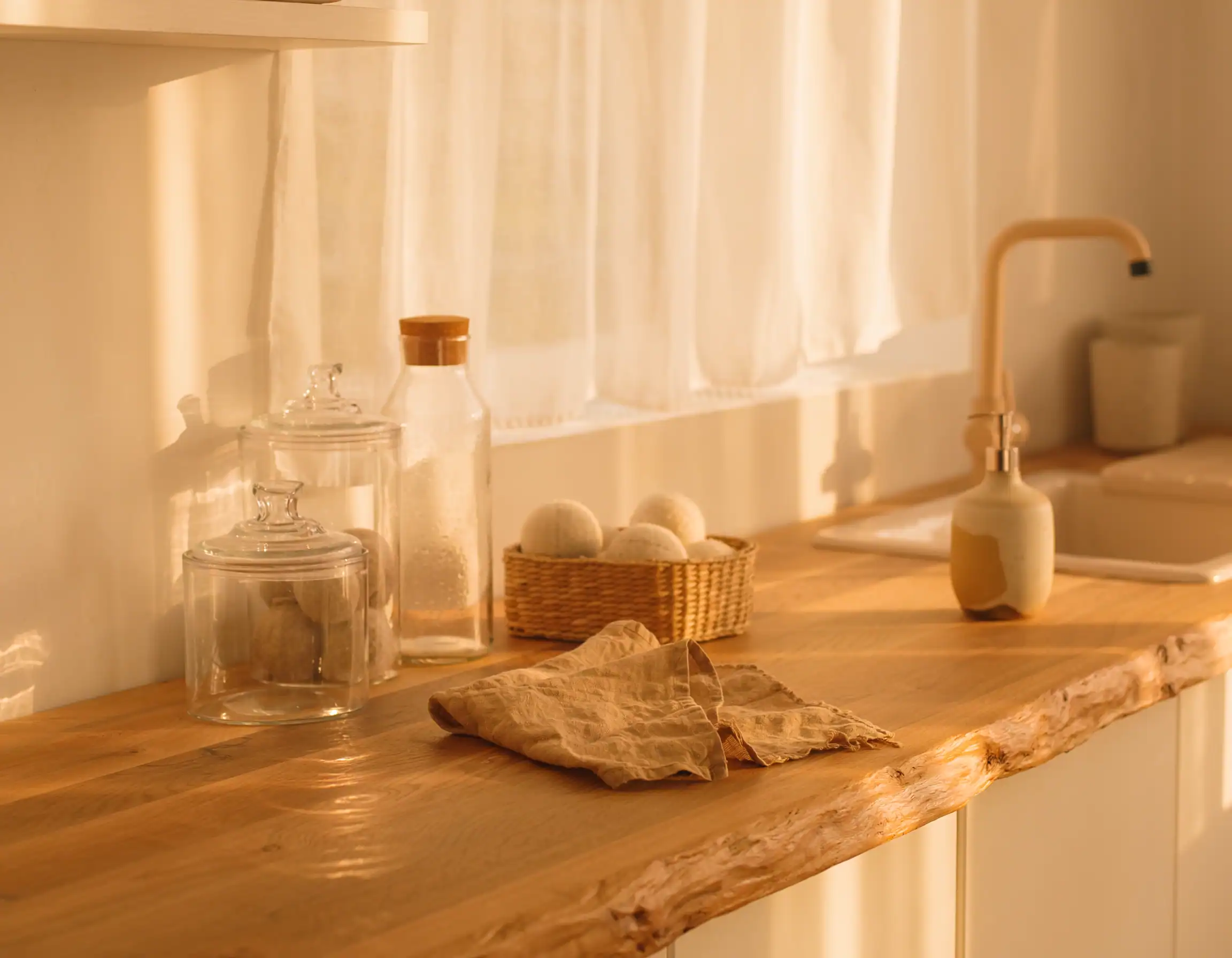
Wool dryer balls do the same job mechanically — they reduce static and soften fabrics by tumbling — without any chemical coating. They’re reusable, they’re inexpensive over time, and they work. If you want light scent, a drop of essential oil on a dryer ball gives you that without the synthetic fragrance load of a conventional sheet.
This swap costs almost nothing to maintain, is completely reversible if you don’t like it, and eliminates a daily skin-contact variable that most families don’t think twice about.

Swap 5: Ventilation Over Air Fresheners
Indoor air is one of the most consistent exposure variables in any home — and one of the most invisible. We spend most of our time indoors, in spaces with limited airflow, with a combination of cleaning products, personal care products, synthetic fragrance, and off-gassing materials contributing to the background air.
Synthetic air fresheners, plug-in diffusers, and scented candles add to that load rather than reducing it. The instinct behind them is good — a clean, fresh-smelling home. But masking odor with synthetic fragrance compounds is different from actually improving air quality.
The more effective approach: ventilation. Opening windows when weather allows, running a bathroom fan after showers, cracking a window while cooking. These habits reduce indoor pollutants rather than layering on top of them.
If your home has persistent air quality concerns — older building materials, recent renovations, or a very closed environment — an air purifier with a true HEPA filter is a reasonable addition. But for most families, the ventilation habit alone makes a meaningful difference and costs nothing.

Why These Five Specifically
These five swaps share two things: they target frequent, repeated exposure, and they’re genuinely achievable without overhauling how you live.
Fragrance-free laundry touches every surface in your home and every piece of clothing your family wears. Food storage and cookware are in contact with what your family eats every day. Dryer sheets are on skin for hours. Indoor air is breathed continuously.
The theme is repetition. Not drama — repetition. A switch made once that affects something repeated hundreds of times per year is far more meaningful than a complicated overhaul that only touches occasional exposures.
For families with young children, these swaps cover the categories where babies and toddlers have the most consistent skin-and-air contact: laundry, food, and the air in their rooms. If you’re specifically working through a baby-safe routine, the non-toxic baby wipes guide, non-toxic diaper cream guide, and non-toxic baby lotion guide cover the skin-contact piece of that picture.
What to Do After These Five
Once these swaps feel natural — which usually takes a few weeks, not months — you’ll have a better sense of where you want to go next.
For some families that’s the kitchen: evaluating dish soap, dishwasher detergent, and water filtration. Our non-toxic dish soap guide, dishwasher detergent guide, and water filter guide cover those in the same ingredient-first format.
For others it’s personal care — deodorant, sunscreen, and the products used daily on skin. The non-toxic deodorant guide and non-toxic sunscreen guide are the most practical starting points there.
The point isn’t to work through every category immediately. It’s to let each swap settle before adding the next one. That’s what makes this sustainable rather than overwhelming.
Frequently Asked Questions
Do I need to replace everything at once? No — and trying to usually leads to burnout. The five swaps above are prioritized by frequency of exposure. Start with whichever one feels most accessible and let it become habit before moving to the next.
What’s the most important first swap? Fragrance-free laundry detergent. It touches more surfaces in your home — clothing, bedding, towels, children’s pajamas — than almost any other single product, and the switch is straightforward.
Are “natural” or “plant-based” products automatically safe? Not necessarily. “Natural” and “plant-based” aren’t regulated terms — any brand can use them. The ingredient list is the most reliable tool, which is why the buying guides on this site evaluate ingredients directly rather than relying on front-label claims.
Is it worth buying all-new cookware? You don’t need to replace all of it. Start with your most-used pan — typically a medium skillet — and replace it with stainless steel or cast iron. The rest of your cookware can be replaced gradually as pieces wear out.
What about baby products specifically? For babies, the same principles apply with more emphasis on skin-contact products since baby skin is thinner and more permeable. Fragrance-free is the most important baseline. The buying guides for diapers, baby wipes, and baby lotion apply the same ingredient-first lens to those categories.
How long before I notice a difference? Most families notice the fragrance change within a few days — a subtler smell in laundry, a different feel to the air in the house. The other swaps are less immediately noticeable but accumulate over weeks and months of reduced daily contact.
Bottom Line
Low-toxic living doesn’t require a dramatic overhaul. It requires identifying where exposure repeats most and making small, durable changes in those places.
Fragrance-free laundry. Glass food storage. A better pan. No dryer sheets. Fresh air instead of synthetic scent.
Five changes. All of them practical. None of them require perfection.
Start with one. Let it stick. Move to the next.
Related Guides
- Best Non-Toxic Laundry Detergent
- Best Non-Toxic Cleaning Products
- Best Non-Toxic Stainless Steel Cookware
- Best Non-Toxic Baby Wipes
- Best Non-Toxic Diaper Cream for Sensitive Skin
- Best Non-Toxic Baby Lotion
