Short Answer
Heat affects materials by causing expansion, gradual wear, and structural changes over time. In the kitchen, repeated high heat combined with direct food contact can influence how certain surfaces perform. For us as parents, understanding this helps us prioritize the cookware and tools we use most often.
Why This Matters for Us as Parents
Cooking involves transformation. Heat turns raw into cooked. Liquids reduce. Oils shimmer. Steam rises. We expect change in food — that’s the point.
What we don’t always think about is that heat also affects the materials doing the cooking.
This doesn’t mean something dramatic happens the first time we turn on the stove. Materials don’t instantly fail or become unsafe. What heat does, in most cases, is gradual. Subtle. Repeated.
Understanding what “low-toxic” means in the kitchen becomes clearer when we understand how heat interacts with materials over time.
It’s not about fear. It’s about physics.
What to Know (The Basics)
When materials are exposed to heat, several basic things happen:
- They expand as temperature rises.
- They contract as they cool.
- Repeated expansion and contraction can cause gradual wear.
- Extremely high heat can accelerate degradation in certain materials.
- Friction combined with heat increases surface stress.
This process is natural. Every material — metal, ceramic, glass, silicone — responds to heat in some way.
The key difference is durability.
Some materials are inherently stable at high temperatures and can withstand repeated cycles with minimal change. Others are more sensitive to prolonged or extreme heat and may degrade faster.
Understanding where kitchen exposure actually happens helps us see why daily heated items deserve more attention than decorative pieces or rarely used bakeware.
Why Repetition Matters More Than One-Time Use
One high-heat cooking session does not define a material.
Repetition does.
If we use the same pan twice a day for years, that pan experiences hundreds — even thousands — of heating and cooling cycles.
That’s where material stability matters.
Low-toxic living in the kitchen focuses on patterns, not isolated events. It’s not about the one time we sear a steak at high heat. It’s about what happens daily.
If something is used repeatedly under heat and in direct contact with food, it naturally carries more relevance than something stored in a cabinet most of the year.
Understanding what matters most (and what matters less) in the kitchen helps us prioritize based on frequency instead of fear.
How This Shows Up in Daily Life
In practical terms, heat interaction shows up in small ways:
- A pan that loses smoothness over time.
- A coating that begins to scratch or wear.
- A utensil that softens or changes texture after repeated exposure.
- A container that becomes cloudy after reheating cycles.
These changes are usually gradual, not sudden.
We as parents don’t need to analyze every surface under a microscope. We simply need to notice visible wear and understand that heat accelerates natural material aging.
The combination of:
- High temperature
- Repeated use
- Direct food contact
is what makes certain cookware more relevant in the low-toxic conversation.
The Role of Temperature
Not all heat is equal.
Low and medium cooking temperatures generally cause less stress on materials than prolonged high heat.
For example:
- Simmering sauce on medium is different from preheating an empty pan on high.
- Gentle reheating is different from repeated high-temperature broiling.
This doesn’t mean we should never cook at high heat. It simply means moderation and awareness matter. Many materials perform best within certain temperature ranges. Consistently exceeding those ranges may accelerate wear.
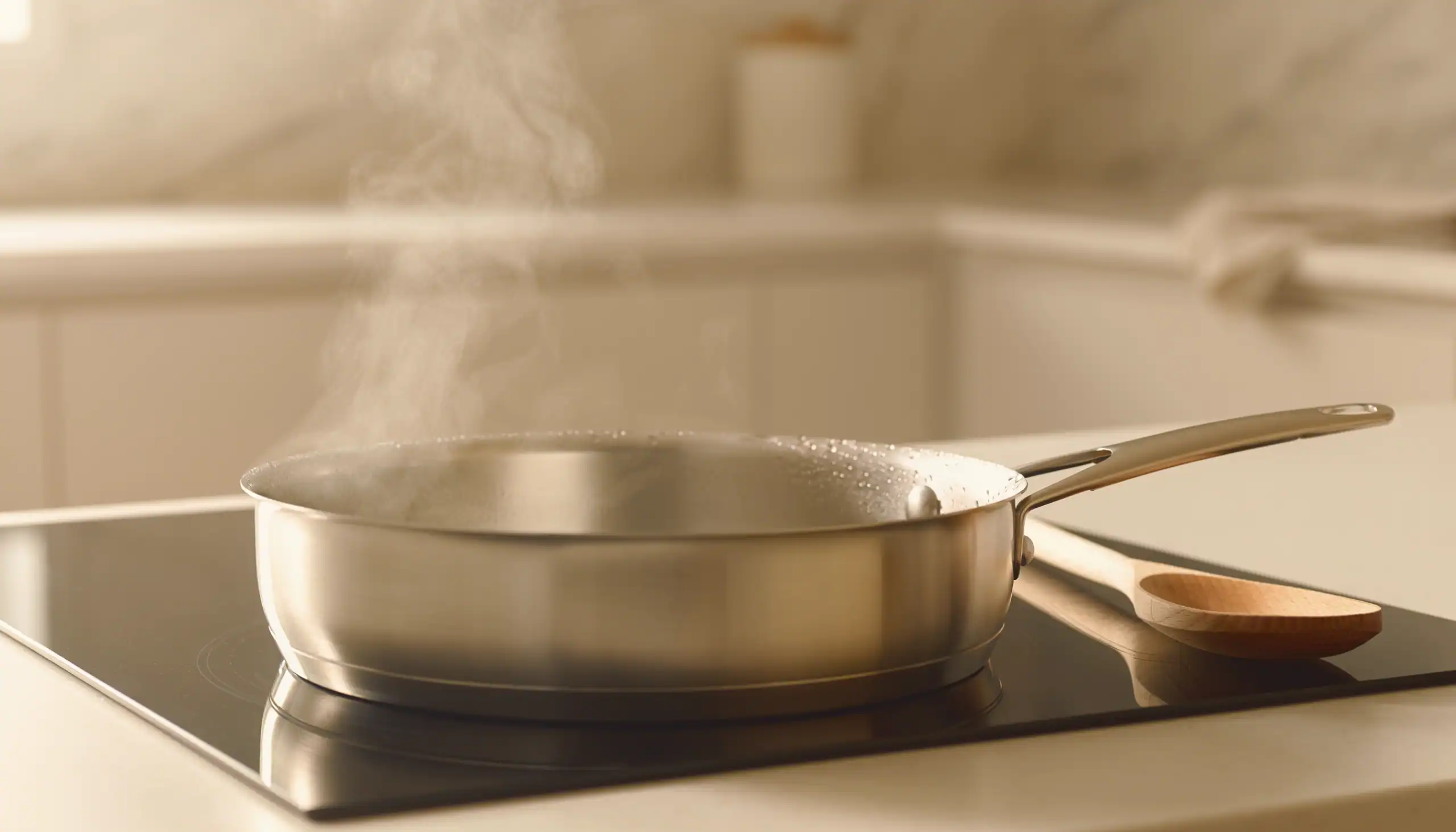
Stainless steel is one of the most studied and consistently stable materials under repeated high heat — no coating to degrade, no chemicals that off-gas, and no change in surface behavior as the pan ages. Our guide to non-toxic stainless steel cookware explains the construction differences between brands and what actually matters when evaluating a pan for daily use in a family kitchen
Common Myths or Misconceptions
- “If it looks fine, nothing has changed.”
- “All cookware materials behave the same under heat.”
- “One high-heat session ruins everything.”
- “If I can’t upgrade everything immediately, there’s no point.”
Materials degrade gradually, not catastrophically.
Heat doesn’t equal danger. It equals stress. And stress over time creates wear.
Low-toxic kitchens are built on understanding that long-term patterns matter more than one intense cooking session.
How We as Parents Can Approach This Safely
A calm approach to heat and materials includes:
- Avoiding unnecessarily extreme heat settings.
- Replacing visibly damaged cookware.
- Using utensils designed for the cookware type.
- Not overheating empty pans.
- Being mindful of scratched or peeling surfaces.
We don’t need to fear heat. We just need to respect it.
Low-toxic living in the kitchen is about reducing unnecessary stress on materials that interact with our food most often.
It’s not about perfection — it’s about longevity.
When Products Do Matter (Later)
Over time, understanding heat mechanics often leads many of us as parents to focus on:
- Everyday stovetop pans.
- High-heat baking sheets.
- Frequently reheated storage containers.
- Utensils resting in hot liquids.
These items combine heat, repetition, and proximity to food — which is why they tend to become upgrade priorities. But these shifts can happen gradually.
We don’t need to replace everything at once. We simply pay attention to wear patterns and prioritize daily-use items first.
Final Takeaway
Heat changes materials slowly over time through expansion, contraction, and repeated stress. In the kitchen, daily high-heat use combined with direct food contact makes certain cookware more relevant than others. When we as parents understand how heat and repetition work together, we can make steady, practical improvements without turning our kitchen into a source of anxiety.
