Short Answer
In the kitchen, “low-toxic” means being thoughtful about materials, heat, storage, and daily routines that involve repeated contact with food. For us as parents, it isn’t about replacing everything we own. It’s about prioritizing high-frequency items and making gradual, informed adjustments over time.
Why This Matters for Us as Parents
The kitchen is one of the most active spaces in our home. It’s where we cook breakfast before school, prep snacks, pack lunches, reheat leftovers, and occasionally stand at the counter wondering why we opened the fridge in the first place.
Because it’s used so frequently, the kitchen naturally becomes part of the low-toxic conversation.
But here’s what often gets misunderstood: low-toxic in the kitchen is not about fear of food. It’s about awareness of materials.
Unlike a decorative shelf or a hallway table, kitchen tools come into direct contact with what we eat — often under heat. And heat changes things. Over time, repeated heating, cooling, washing, and friction can affect materials in subtle ways.
Understanding what “low-toxic” means in the kitchen allows us to focus on patterns instead of panic.
What to Know (The Basics)
Low-toxic living in the kitchen rests on three simple principles:
- Repetition matters.
- Heat matters.
- Direct food contact matters.
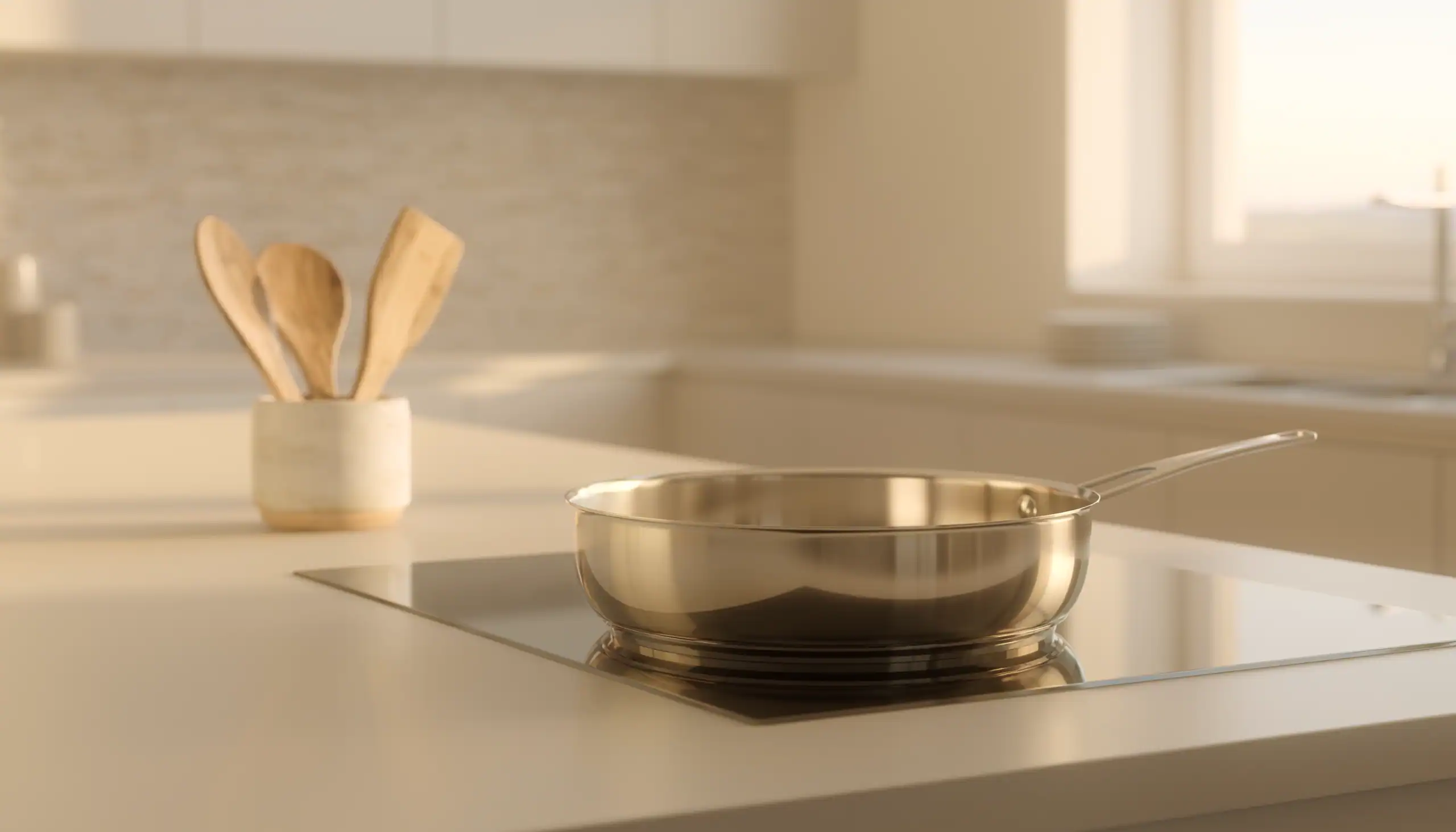
Repetition means daily use carries more weight than occasional use. If we cook eggs in the same pan every morning, that pan deserves more attention than a specialty roasting dish used twice a year.
Heat matters because materials respond differently when heated. Understanding how heat changes materials helps explain why cookware conversations often center around stability and durability.
Direct food contact matters because anything touching food has more relevance than items that don’t.
Low-toxic in the kitchen doesn’t mean eliminating every synthetic material. It means understanding where frequency, heat, and contact overlap.
How This Shows Up in Daily Life
In practical terms, low-toxic kitchen awareness might look like:
- Being mindful of cookware used daily.
- Avoiding overheating materials not designed for high heat.
- Replacing visibly worn or scratched surfaces.
- Being thoughtful about how we reheat food.
- Letting go of stress around occasional takeout.
It doesn’t mean auditing every drawer overnight.
It doesn’t mean tossing your grandmother’s cookware.
It doesn’t mean obsessing over one meal.
If something is used daily, heated repeatedly, and in direct contact with food, it deserves more attention than something rarely used.
Understanding where kitchen exposure actually happens can help us narrow focus instead of widening anxiety.
Common Myths or Misconceptions
- “Low-toxic means organic-only.”
- “Low-toxic means anti-food.”
- “Low-toxic means I have to buy specialty brands.”
- “Low-toxic means everything I own is wrong.”
None of those are accurate.
Low-toxic in the kitchen is about material literacy, not food fear.
It’s not about perfection. It’s about prioritization.
How We as Parents Can Approach This Safely
A calm approach might include:
- Identifying which pans are used most frequently.
- Lowering heat when possible instead of maxing it automatically.
- Replacing peeling or heavily scratched surfaces.
- Choosing durable materials when upgrading over time.
We don’t need to control every variable. We just need to understand where daily patterns exist.
Low-toxic kitchens are built gradually.
When Products Do Matter (Later)
Over time, many of us as parents become more intentional about:
- Everyday cookware
- Storage containers used for reheating
- Cutting boards
- Frequently used utensils
These combine repetition and heat, which is why they tend to matter most.
But upgrades can unfold slowly. There’s no rush. It may be helpful to think about what matters most (and what matters less) in the kitchen as you think about where to start.
For families ready to move from understanding to action, cookware is the most practical first step — it involves daily heat and direct food contact, which is exactly the pattern that matters most. Our guide to non-toxic stainless steel cookware covers what to look for and which brands hold up to scrutiny. For the cleaning side of the kitchen, our guides to non-toxic dish soap and non-toxic dishwasher detergent address the products used on dishes and surfaces every single day.
Final Takeaway
Low-toxic in the kitchen isn’t about restriction — it’s about understanding where heat, repetition, and food contact intersect. When we as parents focus on daily-use materials and make steady improvements over time, the kitchen becomes a calm, intentional space rather than a source of overwhelm.
