Short Answer
Kitchen exposure doesn’t come from one dramatic source — it comes from repeated daily contact with cookware, storage containers, utensils, heat, and surfaces. For us as parents, understanding where repetition happens helps us focus on what truly matters instead of trying to control everything.
Why This Matters for Us as Parents
When people first hear “low-toxic kitchen,” the assumption is often that something major must be wrong. That food itself is the issue. Or that every modern appliance is suspect.
That’s not the framework we’re using.
Low-toxic awareness in the kitchen is less about fear and more about pattern recognition. The kitchen is one of the most frequently used spaces in our home. It’s not just where we cook — it’s where we reheat, store, prep, rinse, scrub, and repeat.
Because of that repetition, certain materials interact with heat and food more often than we realize.
Understanding what “low-toxic” means in the kitchen gives us context. It helps us zoom out. Instead of asking, “Is this dangerous?” we ask, “How often does this happen?”
That shift changes everything.
What to Know (The Basics)
Exposure in the kitchen is usually subtle and cumulative.
It tends to involve:
- Repeated heating of cookware
- Frequent reheating in storage containers
- Friction from cutting boards and utensils
- Wear and tear from washing and scrubbing
- Surfaces that come into daily contact with food
Unlike decorative items, kitchen tools are functional. They endure temperature swings, moisture, scraping, and abrasion.
Understanding how heat changes materials (and why it matters) helps explain why stability under repeated heat becomes part of the conversation.
But it’s important to remember: exposure isn’t a one-time event. It’s a pattern.
The Five Most Common Kitchen Contact Points
If we break it down practically, exposure in the kitchen most often happens through:
1. Cookware
Pans and pots that are used daily — especially under high heat — naturally experience expansion, contraction, and wear over time.
If we cook eggs every morning in the same pan, that pan sees more repetition than any other item in the room.
2. Food Storage Containers
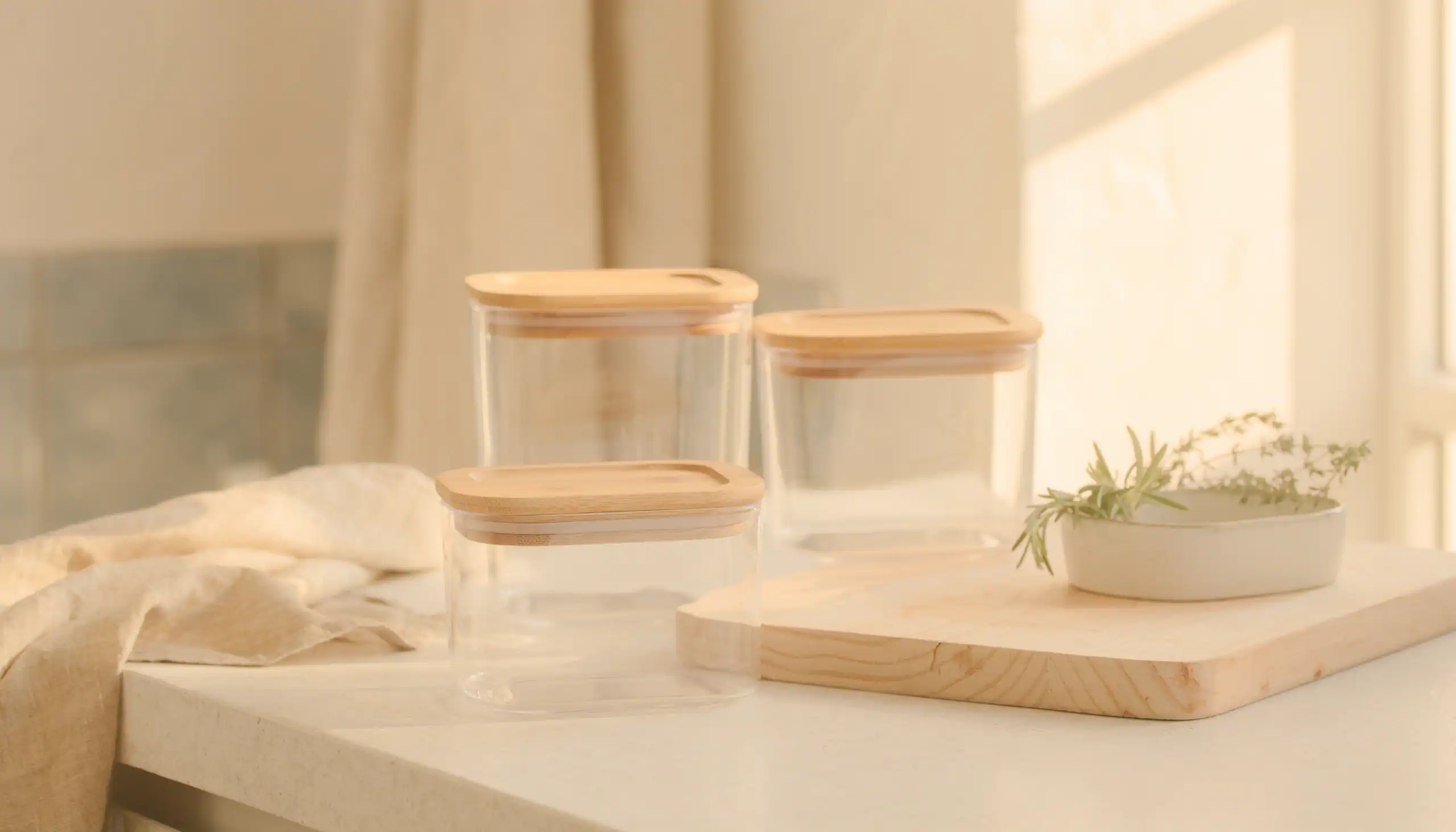
Leftovers get stored, refrigerated, reheated, washed, and reused. Containers that experience repeated heat cycles deserve more attention than ones used only for cold storage.
3. Cutting Boards
Cutting boards undergo daily friction. Knife contact creates micro-wear over time. While this doesn’t require panic, frequency matters.
4. Utensils
Utensils resting in hot sauces or soups experience prolonged heat exposure. Again, repetition is the factor that matters.
5. High-Heat Appliances
Stovetops, ovens, and even air fryers introduce elevated temperatures into routine cooking.
The key is not that these are “bad.” It’s that they are repeated.
Understanding where exposure actually happens prevents us from obsessing over low-impact areas.
How This Shows Up in Daily Life
In real life, this might look like:
- Cooking breakfast and dinner in the same two pans.
- Reheating lunch in the same container multiple times a week.
- Using the same cutting board daily.
- Leaving a utensil in simmering soup.
These are normal, everyday patterns.
Low-toxic awareness simply means asking: Is this happening frequently? Is heat involved? Is food directly touching the surface?
If the answer is yes, that item carries more relevance than decorative serveware or rarely used bakeware.
Understanding what matters most (and what matters less) in the kitchen keeps the focus narrow instead of overwhelming.
Common Myths or Misconceptions
- “Exposure in the kitchen must be dramatic.”
- “Only nonstick cookware matters.”
- “If it’s sold in stores, it’s perfectly stable.”
- “If I didn’t start with the best materials, it’s too late.”
None of these are accurate.
Exposure in the kitchen is usually about subtle wear over time — not immediate danger.
And low-toxic living isn’t retroactive. It’s directional.
How We as Parents Can Approach This Safely
A calm approach includes:
- Identifying which items are used daily.
- Replacing visibly worn items first.
- Avoiding extreme high heat when unnecessary.
- Not overreacting to occasional exposures.
If something is scratched, peeling, or deteriorating, replacing it makes more sense than upgrading rarely used items.
We don’t need to purge. We need to prioritize.
This approach protects both our peace and our budget.
When Products Do Matter (Later)
Over time, many of us as parents naturally focus on:
- Everyday pans
- Frequently reheated storage containers
- High-contact cutting boards
- Utensils exposed to heat daily
These categories combine repetition, heat, and direct food contact — which is why they often become upgrade points later. But they don’t need to be addressed all at once; low-toxic kitchens evolve gradually.
Of all the places exposure accumulates in the kitchen, cookware is where daily heat and food contact overlap most consistently. Our guide to non-toxic stainless steel cookware walks through what that means in practice — what materials to look for and why construction quality matters more than marketing claims. The cleaning products used on those surfaces every day are worth equal attention — our guides to non-toxic dish soap and non-toxic dishwasher detergent cover both sides of the sink.
Final Takeaway
Kitchen exposure happens in daily patterns, not dramatic events. When we as parents understand where heat, friction, and repetition intersect with food contact, we can prioritize the items that matter most — without turning our kitchen into a project.
