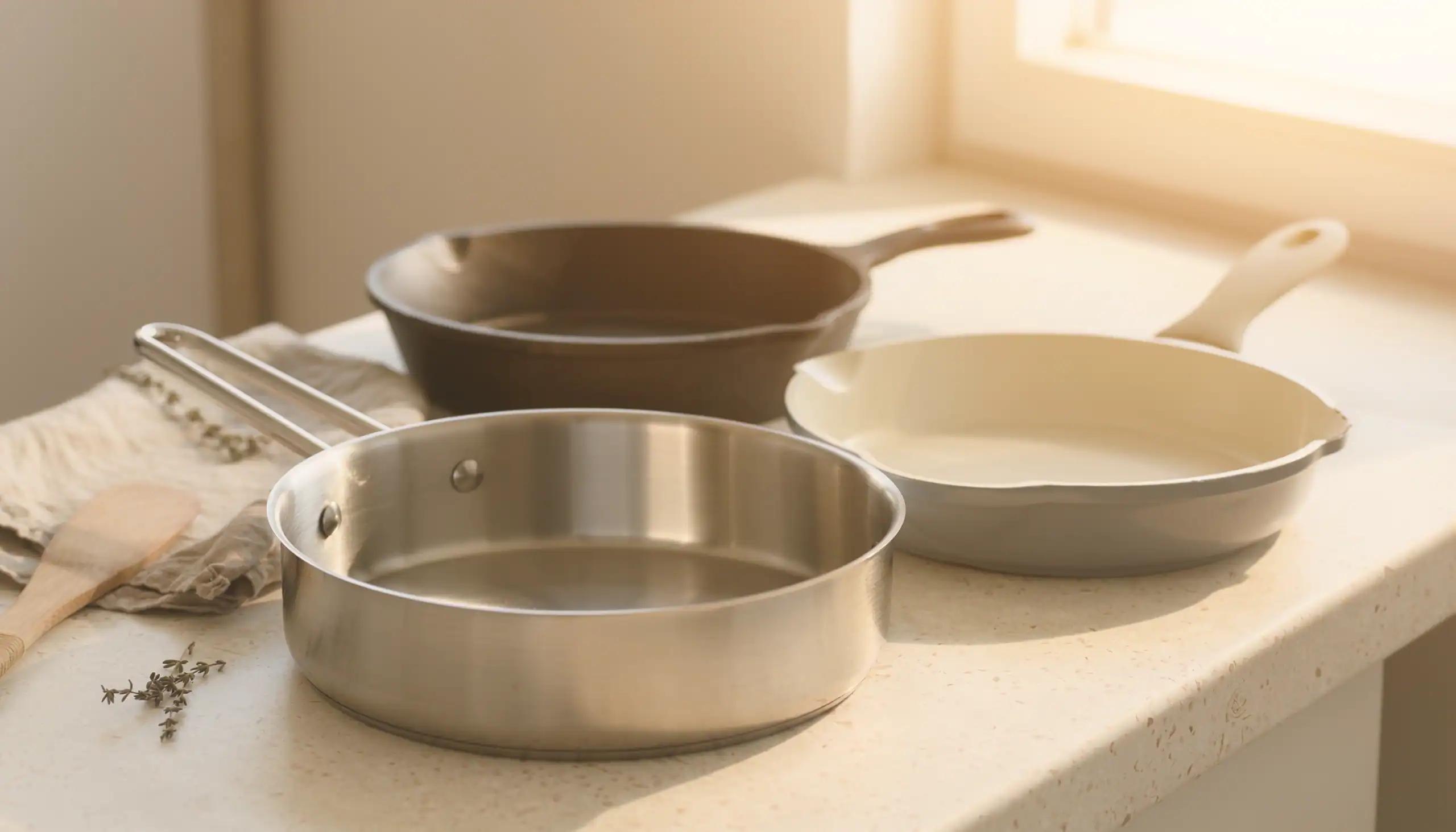
Short Answer
Cookware materials differ in durability, heat tolerance, and long-term stability. For us as parents, understanding the basic properties of common materials helps us prioritize daily-use items without getting pulled into marketing claims or fear-based messaging.
Why This Matters for Us as Parents
Cookware conversations can get intense quickly.
One article says stainless steel is best. Another says cast iron is the only safe option. Somewhere in between, we see phrases like “non-toxic,” “chemical-free,” or “professional grade,” and it becomes hard to tell what actually matters.
The goal here isn’t to declare a winner.
It’s to understand how different materials behave under heat and repetition so we can make practical decisions based on how we actually cook.
Low-toxic living in the kitchen isn’t about chasing the perfect pan. It’s about understanding how materials respond to daily use — especially under heat.
If we know the basics, we don’t get pulled into hype.
What to Know (The Basics)
Most cookware falls into a few major categories:
- Stainless steel
- Cast iron
- Carbon steel
- Ceramic-coated cookware
- Traditional nonstick
- Glass
Each material has strengths and trade-offs.
Understanding how heat changes materials helps explain why durability and stability matter more than marketing language.
Let’s walk through the basics.
Stainless Steel
Stainless steel is widely used because it is durable, stable under high heat, and resistant to corrosion.
Pros:
- High heat tolerance
- Durable with proper care
- No surface coating to peel
Considerations:
- Food can stick if not used properly
- Requires learning heat control and oil timing
For daily stovetop cooking, stainless steel is often chosen for its longevity.
Cast Iron
Cast iron is known for its durability and heat retention.
Pros:
- Extremely long lifespan
- Excellent heat retention
- Can improve with proper seasoning
Considerations:
- Heavy
- Requires maintenance to prevent rust
- Slower to heat evenly
Cast iron is often used for high-heat cooking because it tolerates temperature well.
Carbon Steel
Carbon steel shares similarities with cast iron but is lighter.
Pros:
- Durable
- Good heat tolerance
- Responsive to temperature changes
Considerations:
- Requires seasoning
- Can rust without proper care
It combines some advantages of stainless and cast iron, depending on use.
Ceramic-Coated Cookware
Ceramic-coated pans are often marketed as “non-toxic” alternatives to traditional nonstick.
Pros:
- Smooth cooking surface
- Easy cleanup when new
- Often used for low-to-medium heat
Considerations:
- Coating can degrade over time
- High heat may shorten lifespan
- Surface wear matters
Ceramic-coated cookware performs best within moderate heat ranges.
Traditional Nonstick
Traditional nonstick cookware is designed to prevent sticking at lower cooking temperatures.
Pros:
- Easy food release
- Convenient for delicate foods
Considerations:
- Surface can scratch
- High heat may degrade coating over time
- Shorter lifespan compared to uncoated metals
Repetition and overheating are usually what shorten the life of nonstick surfaces.
Glass
Glass is often used for baking and food storage.
Pros:
- Stable under oven temperatures
- Non-reactive surface
Considerations:
- Can shatter with extreme temperature changes
- Not designed for stovetop heat
Glass works well within its intended temperature range.
How This Shows Up in Daily Life
For us as parents, the question isn’t which material is “perfect.” It’s:
- What do we cook most often?
- At what temperatures?
- How frequently?
- Which pans experience the most wear?
If we cook eggs daily, that pan deserves more attention than a roasting pan used twice a year.
Understanding where kitchen exposure actually happens helps us see that frequency matters more than brand name.
A heavily scratched surface, regardless of material, may deserve replacement before an older but intact one.
Common Myths or Misconceptions
- “There is only one safe material.”
- “Marketing labels equal performance.”
- “More expensive always means safer.”
- “If it’s trending online, it must be superior.”
Materials have properties. Marketing has language.
Our job is to understand the former.
Low-toxic kitchens are built on understanding patterns, not chasing trends.
How We as Parents Can Approach This Safely
A practical approach might include:
- Identifying which cookware is used daily.
- Not exceeding recommended heat levels.
- Replacing visibly worn or peeling surfaces.
- Rotating use to reduce wear on one pan.
We don’t need to replace everything at once.
Gradual upgrades based on frequency make more sense than dramatic resets. Understanding what “low-toxic” means in the kitchen is a great place to start.
When Products Do Matter (Later)
Over time, many of us as parents prioritize upgrading:
- Everyday stovetop pans
- Frequently reheated containers
- High-friction cooking surfaces
These categories combine heat, repetition, and direct food contact.
But upgrades can happen gradually. For families who have read through the materials and landed on stainless steel as the most practical everyday choice, our guide to non-toxic stainless steel cookware goes deeper — covering ply count, steel grades, fully clad vs. disk-bottom construction, and how brands like 360 Cookware, Heritage Steel, Made In, and All-Clad actually compare. It’s the buying-decision version of what this article covers conceptually.
Understanding what matters most (and what matters less) in the kitchen prevents overwhelm.
Final Takeaway
Cookware materials differ in durability and heat tolerance, but no material is perfect. For us as parents, the most important factor isn’t hype — it’s how often and how intensely a pan is used. When we understand basic material properties, we can make calm, informed decisions that evolve over time.
